Printable Guide
Potty Training Chart Tips: How to Use a Sticker Chart That Helps
Potty training chart tips backed by the AAP and NHS: when to start, what to reward, how many stickers per prize, accidents, nights and when to stop.
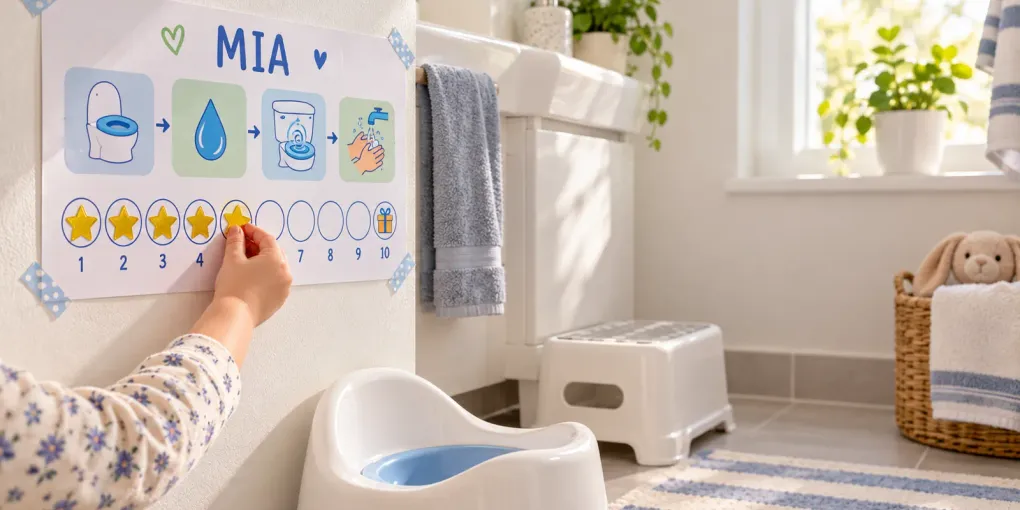
Short answer: a potty training chart works best as a small, positive record of effort. Start once your child shows signs of readiness, hang the chart at their eye level, give a sticker straight away for trying (sitting on the potty counts), and let your child stick it on. Put a small reward at spot 5 and a bigger one at spot 10. Never take stickers away for accidents, keep the chart for daytime only, and phase it out once using the potty is routine.
Those are the core potty training chart tips, and they match what pediatric bodies say: the NHS suggests stickers and reward charts and says to “praise them for trying, whether or not they manage a wee or poo” (NHS), while the American Academy of Pediatrics puts specific praise first and warns against treats and punishments (AAP / HealthyChildren.org). This guide turns that advice into a plan: what to put on the chart, how many stickers before a prize, what to do after accidents, and how to stop. Updated 2026-10-18.
Do potty training charts work? What the experts say
A chart is not required, and no official body says a child needs one. What the evidence and guidance support is praise for effort, no punishment, and patience. A sticker chart is one simple way to make that praise visible. Here is how the main sources compare:
| Source | Stickers or reward charts? | Key line |
|---|---|---|
| NHS (UK) | Yes, as a way to praise | ”Praise them for trying, whether or not they manage a wee or poo” (NHS) |
| AAP (US) | Praise first; “avoid treats and punishments" | "Achieving mastery is the best reward” (AAP); for regression it suggests “stickers on a chart” (AAP) |
| Cleveland Clinic | Yes, sticker chart; limit sugar | ”No shame. No punishment.” (Cleveland Clinic) |
| Canadian Paediatric Society | Optional | ”Rewards are not necessary” (CPS) |
| Zero to Three | Can help short term | Warns that pressure to succeed can create anxiety (Zero to Three) |
| ERIC (UK bladder and bowel charity) | Yes, for sitting and trying | Reward the sitting and trying, and keep the target achievable (ERIC) |
The common ground is clear: a chart helps when it rewards effort, stays small and calm, and never becomes a scoreboard of failures. If your child ignores it or gets upset by it, you can drop it without losing anything.
When to start a potty chart: readiness signs and ages
Start the chart when you start potty training, not before. The ages below are typical ranges, not deadlines:
| Source | What it says about age |
|---|---|
| AAP | Signs of bladder and bowel control appear “between 18 and 24 months”; training usually begins between 2 and 3 years in the US; most children are trained by 4 (AAP) |
| NHS | ”Almost all children can be potty trained between 18 months and 2-and-a-half years old” (NHS) |
| Canadian Paediatric Society | Some children are ready at 18 months, but most start between 2 and 4 (CPS) |
The AAP lists these readiness signs. Two or three of them together are a good moment to print a chart:
- Dry for at least 2 hours during the day, or dry after naps
- Shows signs before a wee or poo (grunting, freezing, squatting)
- Can follow simple instructions
- Can walk to the bathroom and help pull pants down
- Dislikes wet diapers and wants to be changed
- Asks to use the potty or to wear “big-kid” underwear
The NHS takes a slightly different view: “You do not need to wait for your child to show signs or ask to use a potty before you start.” Both agree on one thing: a calm start matters more than an early one. If there is a big change at home (a move, a new baby), wait a few weeks.
How to set up a potty training chart in 5 steps
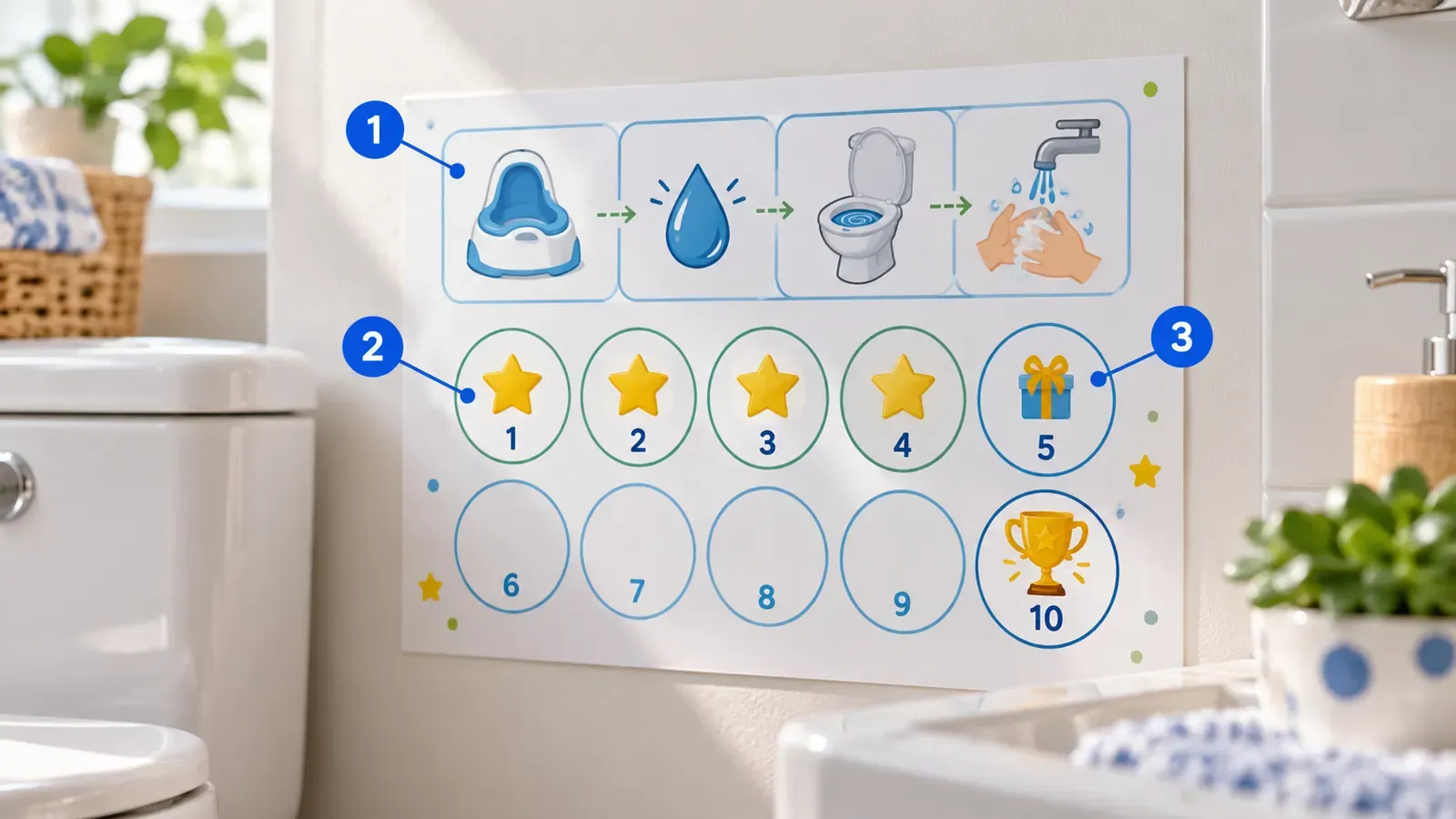
- Choose a short chart. Ten spots is a good first chart: a 2-year-old can see the end. Move to 20 or 30 spots once things are going well.
- Add the picture steps. Toddlers cannot read, so a row of pictures (sit, wee or poo, flush, wash hands) shows the routine at a glance. Your child can point to the next step.
- Write the rule in one line. For example: “One sticker every time you sit on the potty.” Change the rule later, not in week one.
- Mark the rewards. A small reward on spot 5 and a bigger one on the last spot. Use the child’s name and a theme they love (animals, dinosaurs, princesses) so the chart feels like theirs.
- Print at 100% and hang it low. Tape it in the bathroom at your child’s eye level, with a sheet of stickers next to it. Heavier paper or clear tape helps if the chart gets handled a lot.
The free potty training chart maker does all five: 10 to 50 sticker spots, up to six picture steps, rewards on any spot, and US Letter or A4.
Potty training chart tips: what to reward (and what not to)
The most useful of all potty training chart tips is to reward the behavior your child can control right now. Early on, that is sitting and trying, not the result. ERIC, the UK children’s bladder and bowel charity, recommends rewarding “the sitting and trying rather than the weeing/pooing itself” (ERIC). Then raise the bar slowly:
| Stage | Sticker for… | Typical length | Example rule |
|---|---|---|---|
| 1. Getting used to it | Sitting on the potty, even for a minute | First 1–2 weeks | ”Sit = sticker” |
| 2. First successes | A wee or poo in the potty (sitting still counts too) | Next few weeks | ”Sit = 1 sticker, wee in the potty = 2” |
| 3. Telling you | Saying “I need to go” before it happens | As it starts | ”You told me in time = sticker” |
| 4. Dry stretches | A dry morning, afternoon or whole day | Once accidents are rare | ”Dry until lunch = sticker” |
The lengths are a rough guide from our own experience, not an official schedule. Cleveland Clinic’s example of 1 sticker for sitting and 2 for going is a good bridge between stages 1 and 2 (Cleveland Clinic).
Say what went well. The AAP advises being “specific about why you are proud”. Lines you can use:
- “You sat on the potty all by yourself. That’s a sticker!”
- “You told me you needed to go. Great listening to your body.”
- “You flushed and washed your hands. You did every step.”
- “You stopped playing to go to the potty. That’s tricky, and you did it.”
What not to reward: don’t make a sticker depend on a dry day in the first weeks, and don’t use food or sweets as the main prize. Cleveland Clinic suggests limiting sugar as a reward.
How many stickers before a reward?
No official body sets a number. Raising Children Network (Australia) suggests that at first one sticker can equal one reward, then you gradually ask for more (Raising Children). A practical starting point:
| Age | Stickers to the first reward | Chart length |
|---|---|---|
| About 2 | 3–5 | 10 spots, reward at 5 |
| About 3 | 5 | 10–15 spots |
| 4 and up | 5–10 | 20–30 spots |
These numbers are our suggestion. The rule of thumb behind them: the first reward should come within a day or two, or a toddler loses interest.
Reward ideas that cost little or nothing: an extra bedtime story, choosing the song in the car, a trip to the park, bubbles, a new crayon, a sticker sheet, a phone call to grandma to tell her the news, or picking dinner on Friday. Save one slightly bigger prize for the last spot, such as new underwear with a favorite character.
Picture steps: the routine your chart should show
A picture row turns the chart into a visual routine. Most charts use four to six steps:
- Pants down. Practice with clothes that are easy to pull down: elastic waists, no buttons.
- Sit on the potty. Feet flat on the floor or on a step stool. The AAP notes boys can wee sitting down first and stand once they are better at it.
- Wee or poo. Sitting for a minute or two is enough. No long sits.
- Wipe. The AAP says to wipe “thoroughly from front to back”. Expect to help for a long time.
- Flush. The AAP suggests letting your child flush to give them a feeling of control.
- Wash hands. The CDC recommends scrubbing for at least 20 seconds, about two rounds of “Happy Birthday” (CDC).
Start with four steps for a 2-year-old and add “wipe” and “dry hands” later. In the potty training chart maker you can edit the words under each picture or turn the steps off for a plain sticker chart.
Potty training chart tips for accidents and regression
Accidents are part of learning. The NHS says they “are a normal part of learning and happen to most children” and advises not getting angry. Here are the common mistakes and the fix for each:
| Mistake | Why it backfires | Fix |
|---|---|---|
| Taking a sticker away after an accident | Turns the chart into a punishment | Stickers stay. Clean up together, calmly, and move on |
| A long chart (30+ spots) on day one | The prize feels impossible | Start with 10 spots and a reward at 5 |
| Stickers only for dry days | A toddler can’t control that yet | Reward sitting and trying first |
| Big or edible prizes | Prizes have to keep growing | Small, quick, non-food rewards and praise |
| Asking “Do you need to go?” every 10 minutes | Creates pressure and refusals | Offer the potty at routine times: after waking, after meals, before bath |
| Keeping the chart going through tears | The chart becomes a source of stress | Put it away for a few weeks and try again |
Regression (going back to accidents after weeks of success) is common after a new baby, a move, illness or starting daycare. The AAP suggests “hugs and praise, stickers on a chart” to help children regain their footing, and a visit to the pediatrician first, since constipation or a urinary infection can be the cause (AAP). Go back to stage 1 rules for a week: a sticker just for sitting.
Night-time: why the chart stays a day chart
Staying dry at night is a separate skill that usually comes later. The NHS says most children learn it after they are dry in the day and that it “happens naturally over time and is not something you need to teach”. The AAP notes that bedwetting “continues to be quite common through age five” (AAP).
So don’t put dry nights on a sticker chart: a child can’t control them, and a wet bed would mean a missed sticker every morning. If you want a bedtime chart, reward actions instead, such as a trip to the toilet before bed, which the NHS bedwetting page suggests (NHS). Talk to your doctor if your child is still wetting at night after age 5 and it bothers them, or if they were dry for months and start wetting again.
When to stop: potty training chart tips for fading it out
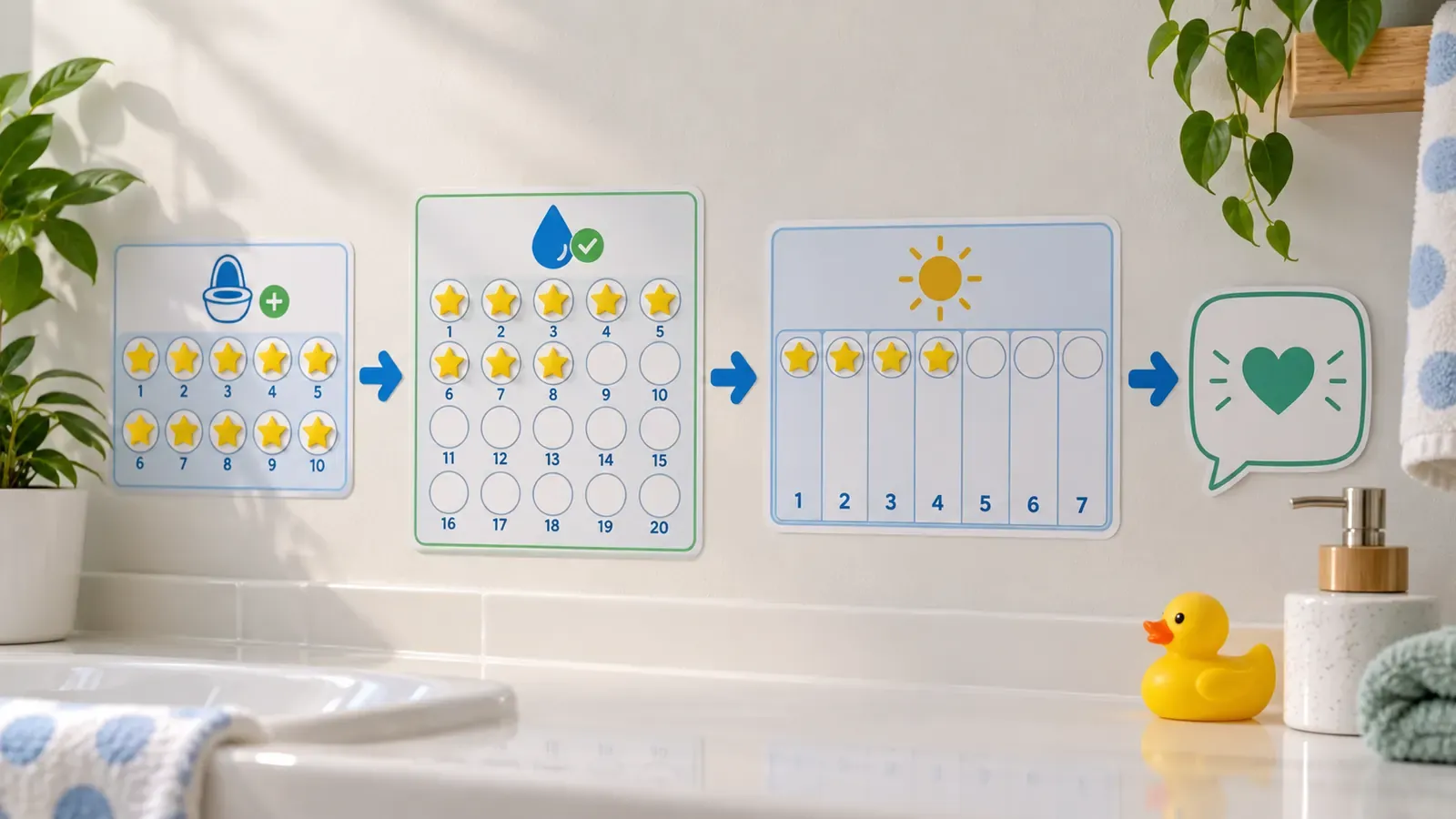
There is no official end date. Pampers notes that most families use a chart for a few weeks until the habit feels routine (Pampers), and the Canadian Paediatric Society says it can take 3 to 6 months to be out of diapers for good. Signs it is time to fade the chart:
- Your child goes on their own most of the time and accidents are rare
- They forget to ask for the sticker
- The chart has been full twice and the reward feels routine
Fade it in steps: a longer chart with fewer rewards, then one sticker per dry day on a weekly chart, then just praise. Let your child “graduate” with the last prize, and keep the full chart somewhere they can see it. That is often the best reward of all.
Potty training chart tips for boys, daycare and travel
- Boys: teach sitting first for both wees and poos. Standing can come later, once the routine is solid.
- Daycare or preschool: print a second copy for the carers, or ask them to send a note so the sticker goes on at home the same day. Use the same words for the steps at home and at daycare.
- Two homes: one chart per home with the same rule, or a single chart that travels in the bag.
- Travel and outings: take a few stickers and a folded mini chart. Praise matters more than the sticker on a busy day.
- Siblings: an older child can have their own chart for a different goal, so the toddler’s chart doesn’t feel like a competition.
Potty training chart tips: FAQ
What should a potty training chart include? Your child’s name, 10 to 20 sticker spots, a row of picture steps (sit, wee or poo, flush, wash hands), a small reward partway and a prize at the end. One clear rule for earning a sticker.
Should I give a sticker just for sitting on the potty? Yes, at first. ERIC and the NHS both recommend praising the try, not only the result. Move to stickers for successes once your child sits happily.
Are potty training rewards a form of bribery? A bribe is offered to stop a behavior in the moment; a chart recognizes effort after it happens. Keep rewards small and pair them with specific praise. The AAP prefers praise and mastery over treats, so the sticker itself should be the main reward.
How long should I use a potty chart? Usually a few weeks to a couple of months. Fade it out once going to the potty is routine and accidents are rare.
My toddler stopped caring about the sticker chart. What now? Change one thing: a new theme, a shorter chart, a reward that comes sooner, or a new rule such as stickers for telling you. If it still doesn’t help, put the chart away and keep the praise.
Does the 3-day potty training method work? Some families like it, but Cleveland Clinic says “there’s no one right way to do potty training” and notes many children are not fully trained in a long weekend. A chart works with any method.
How do I ask an AI to make a potty chart plan? Give the age, what your child can already do and what you want to reward, for example: “Make a potty training sticker chart plan for a 2.5-year-old who sits on the potty but rarely goes. Reward trying first.” Then print the chart with the plan’s numbers.
Ready to start? Make a free potty training chart with your child’s name, the picture steps and a reward at spot 5. It takes about two minutes, needs no sign-up and prints on US Letter or A4. For later stages, the reward chart maker has weekly charts for dry days and longer sticker charts. Those potty training chart tips work best with one simple rule: keep it small, positive and short.